


 NEWS
NEWS
29 April 2026
United in Prevention: Current Trends and Prevention Strategies
Reflection by Sr. Abby Avelino, MM – Talitha Kum International Coordinator
____________________________
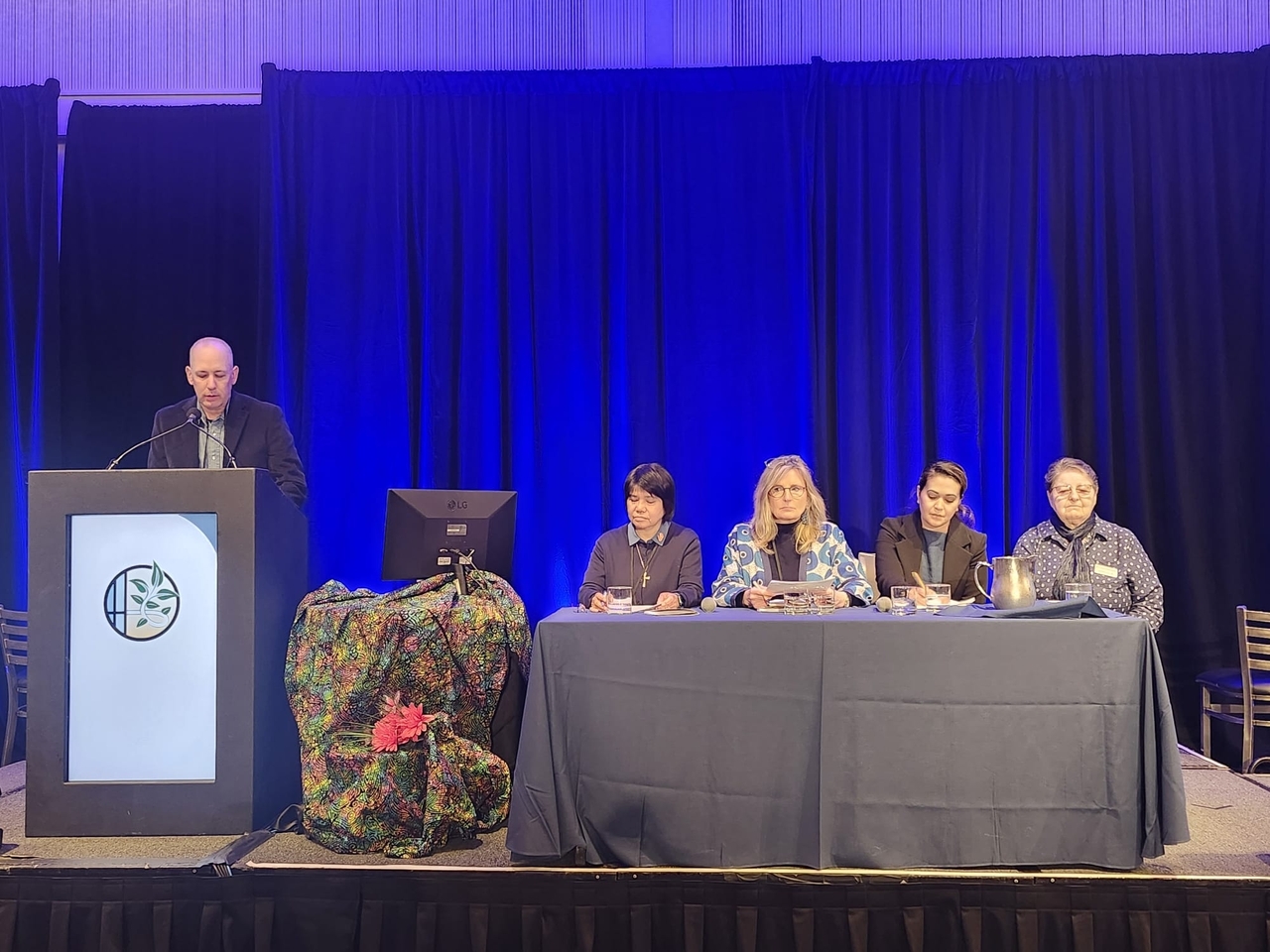
On April 15–17, the Alliance to End Human Trafficking (AEHT), Talitha Kum Network in the USA, held its annual conference in Boston under the theme “United in Prevention: Current Trends and Prevention Strategies.” The event brought together around 200 participants from diverse sectors and continents, deepened understanding of current trends in human trafficking and strengthened collective approaches to prevention. In a world where trafficking is increasingly complex, digital, and transnational, the conference called on participants to renew stronger collaboration, and hope-filled action.
Sr. Abby Avelino, MM, representing the Talitha Kum global network, emphasized that human trafficking today is not an isolated crime but a deeply interconnected global reality. It is shaped by systems of migration and displacement, labor demand and exploitation, gender inequality and violence, economic disparity and environmental pressures. These systems do not operate within borders alone; rather, they are influenced by policies and global economic structures whose effects are felt across regions. Prevention, therefore, requires recognizing these links and responding collaboratively across borders and systems.
Across regions, human trafficking is becoming more hidden, organized, and transnational, driven by increasingly sophisticated criminal networks that exploit digital platforms for recruitment and control. Limited access to safe migration pathways continues to heighten vulnerability, particularly for women, children, migrants, and Indigenous communities. While trafficking manifests differently across regions—from scam compounds in Southeast Asia to labor exploitation in the Middle East, and migration-related risks in Africa, Latin America, the Pacific, and North America—these patterns are deeply interconnected, reflecting how global policy choices, labor systems, and economic inequalities shape and sustain exploitation.
The Talitha Kum network has recently encountered numerous cases involving young people from African regions. In one example, a young African man was trafficked through false job promises into forced labor within an online scam operation in Cambodia. His experience reflects a growing global trend of deceptive recruitment and the increasing connection of human trafficking with digital crime. This issue affects thousands of individuals worldwide and underscores the urgency of understanding these evolving dynamics to strengthen prevention strategies.
These realities were echoed throughout the conference sessions, which offered both critical analysis and practical tools to support more effective, coordinated prevention efforts.
Fr. Greg Boyle, SJ, offered a profound message in his keynote address: “We are called to inclusion, nonviolence, unconditional loving-kindness, and compassionate acceptance.” Prevention, he emphasized, is not only structural but also relational, shaped by how we see and accompany those affected.
An interesting survivor panel offered profound testimony, grounding the discussions in lived experience and reminding participants that effective prevention must be survivor-informed. Survivors not only shared their experiences but also actively shaped prevention strategies. Their leadership affirmed that meaningful prevention is rooted in lived experience, dignity, and survivor wisdom.
Breakout sessions with various speakers and experts further explored evolving challenges, including digital trafficking and AI, psychological grooming, survivor-centered housing, healthcare responses, engagement with legal systems, economic empowerment, and trafficking indicators. These discussions highlighted the rapidly changing, technology-enabled nature of exploitation.
Sr. Abby reflected that from Talitha Kum’s global experience, prevention must be rooted in dignity, shared responsibility, and survivor-informed approaches. It requires strengthening local capacities, empowering young people, ensuring safe migration pathways, and improving access to accurate information. Faith-based networks play a key role by accompanying vulnerable people, raising awareness, advocating for justice, and connecting grassroots realities with global policy.
Ultimately, the conference reaffirmed that prevention is not a single action but a shared global commitment. Human trafficking is not only a crime against individuals; it is also a consequence of systems that can and must be transformed.
To be united in prevention means recognizing that our actions are interconnected across borders. It calls us to build systems that protect dignity, expand safe opportunities, and place survivors at the center of transformation. Protecting human dignity anywhere requires responsibility everywhere.