


 NEWS
NEWS
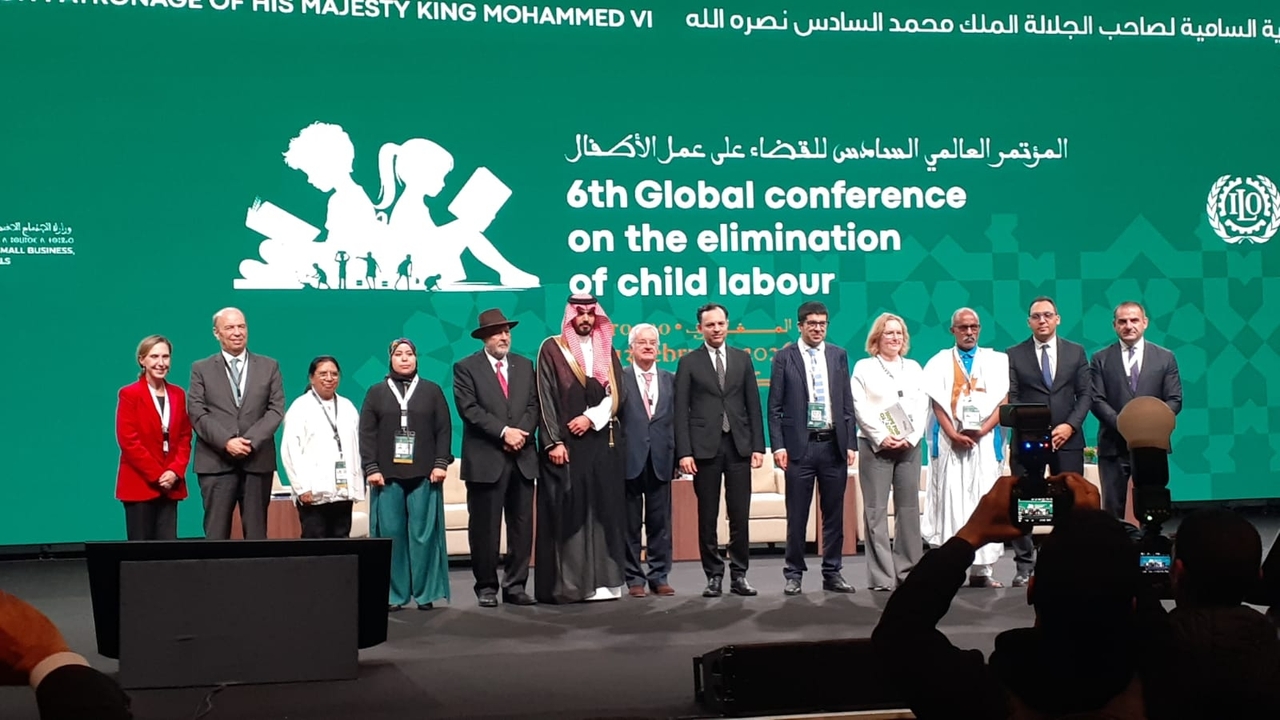
Speech by Sr. Abby Avelino at the ILO Sixth Global Conference on the Elimination of Child Labour
ILO Sixth Global Conference on the Elimination of Child Labour
Side Event: Faith, Dignity and Shared Responsibility
Marrakech, Morocco- 12 February 2026
____________________
Sister Roxy Xavier Kombi, FMM, attended the forum and delivered the speech on behalf of Sr. Abby Avelino. Sr. Rosy is a member of Talitha Kum Morocco, actively promotes the mission of Talitha Kum, and engages with communities across Morocco to raise awareness on protecting the most vulnerable ones.
____________________
"Distinguished guests, representatives of governments and international organizations, respected religious leaders, dear brothers and sisters, I bring you warm greetings from Rome, the heart of our international coordination, on behalf of Talitha Kum, the International Network of Catholic Sisters-led Against Human Trafficking, present and active in more than 100 countries around the world.
The name Talitha Kum comes from the Gospel of Mark (5:41). Jesus takes a young girl by the hand and says, “Talitha Kum,” which means, “Little girl, I say to you, arise.” These words are a call to life, to dignity restored, to hope renewed. For Catholic Sisters around the world, this Gospel moment is not simply a passage of Scripture—it is our mission. We are called to rise up and walk beside those who are marginalized, oppressed, and exploited, especially children whose childhood has been taken from them.
Today, as we address the elimination of child labour, we remember that child labour is not only an economic concern. It is a denial of a child’s right to rise, to grow, to learn, and to dream.
According to the latest joint estimates of ILO and UNICEF, nearly 138 million children worldwide are engaged in child labour, and about 54 million are in hazardous work that endangers their health, safety, and development. Behind these figures are real children—especially in contexts marked by poverty, displacement, conflict, and economic crisis.
Allow me to share a story from Lebanon, where our network Wells of Hope accompanies vulnerable families in areas deeply affected by poverty and instability.
At 7:00 in the morning, in the poorest suburbs of Beirut, one can see two very different scenes: children running with backpacks toward school, and others carrying heavy boxes to prepare market stalls for the day. This contrast reveals a painful truth—child labour has become a normalized reality.
Karim, an 11-year-old boy, worked in a carpenter’s workshop under extremely harsh conditions. He handled heavy and dangerous tools for long hours to earn a small weekly wage to help his family survive. He was frequently beaten and sometimes locked in a bathroom for hours as punishment. His childhood was marked not by play and learning, but by fear and exhaustion. His situation required urgent intervention.
Through awareness sessions in impoverished neighbourhoods and refugee communities, our Sisters and social workers met Karim and his family. They listened, offered counselling, and explained the risks of exploitation and trafficking. The family was connected with support networks, and Karim received psychological accompaniment to address the trauma he had endured. While the structural challenges remain immense—economic collapse, unemployment, political instability—the presence of the Catholic Sisters became a sign that he was not invisible, not forgotten.
In Lebanon, as in many parts of the world, poverty and lack of opportunity lead families to believe that sending children to work is the only way to survive. Yet these children often face long hours, dangerous tools, exposure to chemicals, verbal, physical, and psychological abuse. Many are refugees or displaced. Their vulnerability makes them easy targets for traffickers.
Karim’s story reminds us that change is possible when communities, faith leaders, civil society, and public authorities work together.
Child labour and human trafficking are closely interconnected. Children who begin in exploitative labour situations are at high risk of being trafficked into forced labour, sexual exploitation, domestic servitude, or criminal activities, including the growing phenomenon of “cyber slavery” mentioned by Pope Leo XIV. Geopolitical instability, armed conflict, and widening inequality increase vulnerability to exploitation and trafficking. In these contexts, policy frameworks are essential—but they must be accompanied by moral clarity and grassroots engagement.
As Pope Leo XIV reminded us in his Message for the 12th World Day of Prayer and Awareness against Human Trafficking (coordinated by Talitha Kum on the Feast Day of Saint Josephine Bakhita): that “True peace begins with the recognition and protection of the God-given dignity of every person.” He warns that the same logic of dominion and disregard for human life fuels human trafficking, especially affecting “women and children… the most impacted by this heinous trade.”
The Holy Father further calls us to overcome indifference, affirming that the violence of trafficking can be defeated only through “a renewed vision that beholds every individual as a beloved child of God.”
These words speak directly to our gathering today. Ending child labour is not only about economic reform; it is about restoring dignity. It is about choosing a vision of society where children are never treated as tools of survival or instruments of profit.
Interreligious dialogue offers a powerful path forward. Across our faith traditions, we share essential values: the sacred worth of every human being, justice for the vulnerable, solidarity with the poor, and responsibility toward future generations. When religious and faith leaders speak with one voice, we strengthen prevention and protection efforts. We help shape consciences. We connect global policies with local realities.
Morocco, as a land of coexistence and dialogue, provides a meaningful setting for this exchange. Here, we are reminded that dialogue is not merely conversation, it is shared responsibility translated into action.
In Talitha Kum, Catholic Sisters work globally to prevent exploitation, accompany victims, and advocate for systemic change. We organize awareness sessions, offer psychosocial support, collaborate with local authorities, and empower survivors to become agents of hope. Even when we cannot immediately change all structural conditions, we remain present. We take children by the hand, as Jesus did! We help them to rise, as Jesus did! We are all called to do the same!
Let us strengthen partnerships among governments, international organizations, civil society, and faith communities.
Let us address root causes; poverty, inequality, lack of education, conflict, and forced displacement.
Let us ensure that no child’s survival depends on exploitation.
May our dialogue today renew our shared commitment so that every child can hear, not the demands of labour, but the invitation to life: “Little one, rise up.”
And may we, together, rise up and walk beside them until peace, rooted in dignity, becomes their lived reality.
Thank you. Namaste! Peace be with you!"
Sr. Abby Avelino, MM
International Coordinator – Talitha Kum
____________________
The organizers
Thanks to its distinct constituency and dual governance structure – gathering states and religious leaders – the King Abdullah bin Abdulaziz Centre for Interreligious and Intercultural Dialogue (KAICIID) is an intergovernmental organization uniquely placed to provide an inclusive platform to convene religious leaders, policymakers and experts. The organization aims to end the abuse of religion to justify oppression, violence and conflict, while fostering interreligious and intercultural dialogue as an effective tool to promote justice, peace and reconciliation.
The Permanent Mission of the Kingdom of Morocco to the United Nations Office and other international organizations in Geneva is Morocco’s official diplomatic representation to the United Nations and numerous multilateral institutions based in Geneva, Switzerland. It represents the Kingdom’s interests, promotes cooperation with UN agencies and other international bodies, and participates in multilateral diplomacy on global issues such as human rights, development, peace, and security. The Mission also engages in high-level meetings, negotiations, and dialogues, and works to strengthen Morocco’s collaboration with international partners on political, social, and economic matters.